Garden Clearance in Westminster

Garden clearance in Westminster needs a practical approach that deals with heavy green waste, awkward access and mixed outdoor rubbish without making the job more complicated than it should be. We clear overgrown borders, cut back unmanaged growth, remove old planters and pots, and take away loose materials that have built up in sheds, yards and exterior spaces. The result is a tidier garden that is ready for pruning, redesign, regular maintenance or a fuller outdoor tidy-up.
Our service is suited to front gardens, back gardens, communal outdoor areas and smaller paved spaces where clutter has made it hard to use the area properly. We can remove branches, hedge cuttings, leaves, soil in manageable volumes, broken garden furniture and general outdoor waste, then separate what can be taken for recycling where suitable. If you are comparing options, clear scope and straightforward pricing factors are usually easier to assess than vague promises. You can also request a quotation once you know what needs removing.
For larger clearances, it helps to think about the space in parts: living planting areas, hard landscaping, storage points and waste that is simply waiting to be lifted. That makes it easier to plan the work and avoids overlooking items tucked behind bins, fences or outbuildings. If you are preparing a list, keep it simple and note whether the garden includes stacked timber, damp soil, thorny cuttings or items that may need careful handling. A clear description of the load makes the visit more efficient.
What we remove from gardens
Garden clearance often starts with the obvious waste, but the real work is usually in the mixed items that have gathered over time. We remove green waste such as hedge trimmings, prunings, brambles, weeds and fallen branches, along with non-organic outdoor items like cracked pots, plant trays, damaged furniture and old decorative pieces. Where a garden has been neglected, we can also clear layers of loose rubbish that have ended up outdoors.
The practical value of a clearance is not only that the garden looks tidier. It also makes it easier to inspect beds, paths, fences and storage areas properly. Once the waste is gone, the remaining surface is easier to sweep, maintain and plan around. For households and landlords alike, that can reduce the time spent working around clutter and make follow-on gardening tasks more manageable. If the pile includes several material types, we can sort through them sensibly rather than treating everything as the same load.
Typical outdoor items we are asked to take include:
- branches, clippings and seasonal green waste
- soil, turf and light rubble mixed with garden waste
- old plant pots, trays and broken containers
- weathered wood, fencing offcuts and broken trellis
- unused outdoor equipment and general yard clutter
Garden access, loading and preparation

Access is one of the main things that affects a garden clearance, especially in Westminster where outdoor areas may sit behind terraces, through side passages or beyond shared entrances. Narrow routes, steps and restricted gate widths can all influence how the work is carried out. We plan the loading method around the site so that waste can be moved safely and efficiently without damaging surfaces or straining access points. That matters just as much as the amount of waste itself.
If you are arranging the work, the most useful information is a brief description of what is in the garden and where it is positioned. Photos help when the pile is mixed or when access is awkward, because they show whether there is green waste only or a blend of soil, timber and general rubbish. Try to mention any items that are particularly heavy, sharp, wet or embedded in the ground. That kind of detail supports a more accurate quote.
We also take care to work around features that you want to keep. Useful plants, composters, lighting, water butts and permanent fixtures can all be left in place while the clearance focuses on unwanted material. If a garden contains fragile paving or decorative borders, the loading sequence can be adjusted so that the most awkward items are removed first. A sensible order of work reduces disruption and helps protect the parts of the space you still want to use.
Green waste and seasonal cut-back clearance
Seasonal garden work often produces more material than expected, especially after a long period without pruning or after a storm. We clear hedge cuttings, branches, leaves and other green waste that accumulates after cutting back growth, and we can also remove bundles of mixed outdoor waste that come with the tidy-up. This type of work is often best handled as a focused clearance rather than a loose collection of bags and piles.
There is a difference between loose green waste and material that has started to break down or compact. Damp leaves, tangled brambles and heavy branch piles take up more space than they first appear to, so the load may need more careful handling than a quick visual estimate suggests. Where there are several separate mounds, it can be useful to identify which ones are organic and which contain plastic, broken tools or household items that have found their way outside. That distinction helps us plan the right approach.
When a garden has been left for a while, it is often simplest to clear the worst congestion first, then work back towards the edges and detail areas. The space becomes easier to assess once the main bulk has gone, and customers can then decide whether they want to follow with weeding, pruning or a more complete outdoor refresh. Order matters when the aim is to bring a neglected garden back under control.
Furniture, fixtures and mixed outdoor items
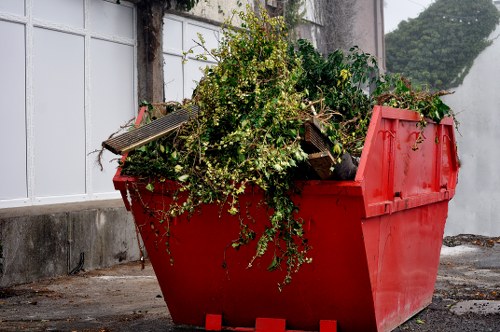
Garden clearance does not always involve plants and cuttings alone. Many outdoor spaces contain furniture, storage items and detached fixtures that have become weathered, unstable or simply unused. We can remove broken chairs, tables, benches, parasols, planters, shelving, old storage boxes and similar items where they are no longer needed. The job becomes especially useful when the garden has turned into a holding area for items that do not belong outdoors for much longer.
Mixed outdoor loads are easiest to manage when items are grouped sensibly before the visit. If you are comparing what should stay and what should go, it helps to separate planted features, reusable tools and waste that has reached the end of its useful life. In some cases, a compact pile can conceal a broader mix of materials underneath, so the clearer the breakdown, the better the estimate. Clear separation also supports recycling where possible.
We often see gardens where one corner has become a storage point for faded furniture, broken plant supports and leftover renovation material. Clearing those items restores circulation through the space and makes it easier to use paths, doors and seating areas again. It also lets the rest of the garden be assessed properly, because hidden edges and corners are easier to see once the clutter is removed. The result is a cleaner base for whatever comes next.
How garden clearance is priced
 Garden clearance pricing is usually shaped by the amount of waste, the type of waste and the access needed to remove it. Green cuttings, timber, soil and mixed rubbish do not all handle in the same way, so a sensible quotation needs to reflect the actual load rather than rely on a guess. It also matters whether the waste is bagged, loose, compacted or spread across several parts of the garden.
For a useful quote, it is often enough to provide a short written summary and a few images if the job is not straightforward. Mention whether there are steps, shared passages, basement-level gardens or limited parking nearby, because those details can influence how the work is organised. If there is a large pile, say whether it includes heavy branches, damp soil or items that may need to be dismantled before removal. That information helps keep the price discussion grounded in the actual job.
Two practical points usually make the process easier: first, identify the main pile that needs removing; second, note anything that could slow loading, such as narrow gates or awkward corners. That does not need to become a long checklist. It simply means the quote can be based on the real clearance rather than a broad assumption. Once that is in place, it is much easier to decide whether the work is a light tidy, a full garden clearance or something in between.
About Westminster
Westminster is a central London district closely associated with the City of Westminster, one of the capital’s most historically significant boroughs. It includes some of the most recognisable institutions in the United Kingdom, from the Palace of Westminster and Westminster Abbey to the ceremonial spaces around Parliament Square. The area’s identity is shaped by government, religion, diplomacy and long-running urban change, with streets that combine civic buildings, terraces, hotels and office premises. Westminster station and the surrounding transport network place the district within an intensely connected part of central London, while the River Thames forms a major southern boundary and visual anchor. Much of the locality’s character comes from the contrast between formal public architecture and the everyday movement of residents, workers and visitors through narrow streets, squares and avenues. Westminster Abbey, with origins reaching back many centuries, stands as one of the most important Gothic buildings in the country and remains central to national ceremonial life. Nearby, the Victoria Tower Gardens and the Thames-side walk provide open views in an otherwise densely built environment, while St James’s Park lies to the west as one of London’s oldest royal parks. The district also contains Whitehall, Downing Street and many long-established routes that reflect the growth of government in the capital. Around these landmarks, the street pattern includes significant historic fabric, with stone façades, formal civic buildings and surviving older lanes that sit beside later commercial development. Westminster therefore combines political importance with architectural depth, making it a place where history, governance and daily city life remain closely intertwined.
Working with larger clearances
Some gardens need more than a quick tidy because the waste has built up across several levels or storage points. In those cases, the work may involve moving material in stages, separating green waste from mixed rubbish and clearing the most cumbersome pieces first. That is especially useful where a garden has a shed, side return, paved seating area or rear access point that has become blocked. A staged approach keeps the job manageable and avoids leaving half-cleared corners behind.
It also helps when a property has more than one kind of outdoor material to remove. A clearance might include branches, bags of cuttings, old garden edging, broken fixtures and a few items that were never intended to stay outdoors. Rather than treating those as separate problems, we handle them as a single practical load and organise the removal around what is actually present. That makes it easier to bring order to the space without overcomplicating the process.
Once the obvious waste is gone, it becomes easier to see whether the garden needs follow-on work such as weeding, pruning or replacement of worn items. Some customers want the space simply cleared and left ready for their own work, while others prefer to clear the bulk first and then decide what comes next. Either way, the first step is the same: remove the clutter, open up the space and give the garden a usable foundation again. That foundation matters.
Garden waste handling and recycling choices
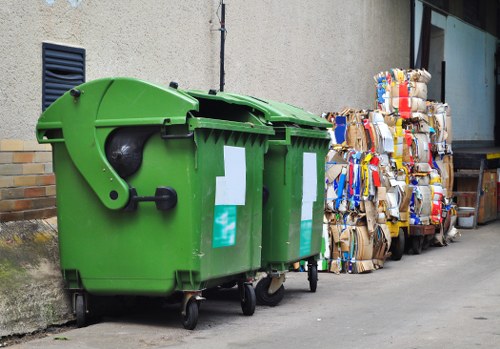
Responsible handling is an important part of garden clearance, particularly where the load contains a mix of organic and non-organic material. Green waste can often be separated from timber, plastics and damaged outdoor furniture, which makes the overall disposal process more organised. That separation also helps when items are suitable for recycling or when certain materials need a different route from ordinary garden cuttings. The aim is to avoid unnecessary mixing and keep the load as efficient as possible.
In practical terms, the best outcome is often a straightforward one: remove what is no longer wanted, keep usable fixtures in place and leave the space ready for its next phase. Some gardens need a one-off clearance after a period of neglect, while others need regular seasonal attention to stop the waste from building up again. If you are planning the work, think about whether the garden is being reset for maintenance, replanting or a change in how the space is used. That affects how the clearance is approached.
If you would like to compare options or arrange the work, request a quotation and give a brief summary of the garden, the waste and any access points that matter. We can then respond with a clearer idea of the scope. For a quick first step, simply list the main items and say whether the load is mostly green waste or mixed outdoor rubbish. A short message is often enough to begin. Contact us
Questions to think about before a clearance
Before booking a garden clearance, it is useful to decide which items are definitely going and which ones need to stay for the next stage of work. That simple choice can save time later, especially if a garden contains both waste and reusable outdoor equipment. It also helps to note whether anything is waterlogged, tightly packed or partly hidden under other material, because those details change the way the work is handled. A little structure at the start makes the clearance more straightforward.
Another helpful question is whether the garden needs a full clearance or a targeted one. Some customers only want the bulk of the waste removed so that they can continue with their own gardening afterwards. Others want the area stripped back so that paths, borders and hard surfaces can be properly seen again. Either way, a clear brief helps keep the task aligned with the result you actually want. If you are unsure, you can ask for a quote and describe the space as it is.
Once the waste is gone, the remaining garden is much easier to manage in stages. You may choose to prune, sweep, replant or reorganise the area later, but the initial clearance removes the main obstacle. That is often the point at which a tired or crowded outdoor space starts to feel usable again. For many properties, that practical reset is the main benefit of the service.
Why a tidy outdoor space matters
Garden clearance is not only about removing visible waste. It also helps restore access to the features of the garden that matter most, such as paths, seating areas, planting beds and storage points. Once those areas are unobstructed, it becomes simpler to maintain the space, inspect the condition of fences or paving and decide what should happen next. A cleared garden usually feels easier to use because the important parts are no longer hidden by clutter.
In Westminster, outdoor space is often limited, so making the best use of it is important. A compact courtyard, a small rear garden or a shared exterior area can become far more functional once the waste has been removed and the surface is visible again. The same applies when a garden has been used for temporary storage during works or seasonal changes. Clearing it properly gives the area back its purpose, whether that purpose is planting, relaxing or simply keeping the property in better order.
If your garden has reached the point where the waste is getting in the way of everything else, the next step is simple: contact us for a quotation. A short description of the waste and access is enough to start the conversation, and you can then decide how you want the clearance to be handled. The main aim is to remove what is no longer useful and leave a cleaner, more workable outdoor space behind.